
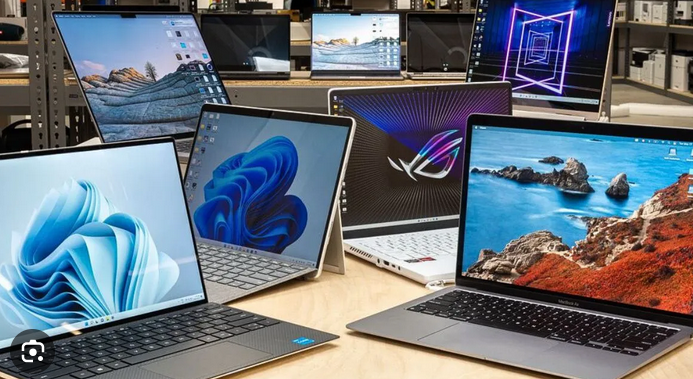
When buying a new laptop, one of the first things people look at is RAM. It is often advertised loudly—8GB, 16GB, 32GB, even 64GB in high-end machines. But how much RAM do you actually need for your daily work, gaming, or creative tasks?
RAM (Random Access Memory) is one of the most important hardware components in your laptop because it directly affects how smooth your system feels. From opening applications quickly to multitasking with dozens of browser tabs, RAM plays a major role in overall performance.
In this guide, we break down how much RAM different types of users really need, how RAM affects performance, common myths, and what you should choose in 2025 and beyond.
What Is RAM and Why Does It Matter?
RAM is temporary, high-speed memory that your laptop uses to store active data and instructions. Whenever you open apps, browse the web, or run software, the system temporarily loads files into RAM so your processor can access them instantly.
Why RAM is Important
-
It controls how many apps you can run at once.
-
It affects multitasking performance.
-
It reduces lag and system slowdowns.
-
It helps with heavy tasks like editing, gaming, and programming.
Simply put, more RAM means more breathing room for your laptop.
How RAM Affects Laptop Performance
1. Faster App Loading
When programs load into RAM, they start almost instantly. If you don’t have enough RAM, the laptop is forced to use the slower storage drive (SSD or HDD), causing delays.
2. Better Multitasking
RAM allows multiple applications to stay active at the same time. More RAM means you can switch between apps faster without freezing.
3. Smoother Browser Experience
Modern browsers like Chrome and Edge use a lot of RAM. Every tab consumes memory. With low RAM, the system struggles—even with simple browsing.
4. Enhances Heavy Workflows
Video editing, 3D modeling, data analysis, coding, and virtual machines all require large amounts of RAM.
Signs You Need More RAM
If any of these happen frequently, your laptop probably needs a RAM upgrade:
-
Apps take too long to open.
-
System freezes with multiple tabs.
-
Frequently sees “Not Responding” errors.
-
Your laptop uses too much swap memory.
-
Fans run loudly even during simple tasks.
-
Games stutter or lag.
-
Editing software crashes during rendering.
Factors That Influence How Much RAM You Need
The ideal RAM depends on several things:
1. Your Workload
Simple tasks need minimal RAM, while professional workloads require much more.
2. Operating System
-
Windows 11 demands more memory than older versions.
-
macOS is optimized and handles memory better.
-
Linux distributions vary.
3. Your Laptop’s Processor and Storage
-
Faster SSDs reduce memory pressure.
-
Powerful CPUs pair well with 16GB+ RAM.
4. Future-Proofing
Apps are becoming more resource-hungry every year. Buying enough RAM now ensures your laptop stays fast for years.
How Much RAM Do You Need? A Complete Breakdown
Below is a category-by-category guide to choosing the right RAM amount.
4GB RAM — Only for Very Basic Use
Who is it for?
-
Basic office tasks
-
Very light browsing
-
Students with extremely limited budgets
-
Entry-level Chromebooks
Performance Expectations
-
Slow with multitasking
-
Only suitable for 3–4 browser tabs
-
Struggles with Windows 11
-
Not recommended for long-term use
Verdict
Avoid 4GB in 2025 unless you’re buying a low-cost Chromebook. For Windows laptops, 4GB is outdated.
8GB RAM — Minimum for General Users
Who is it for?
-
Everyday home users
-
Students
-
Office workers
-
Light multitasking
-
Media consumption
-
Online classes
Performance Expectations
-
Good for 10–12 browser tabs
-
Can run MS Office comfortably
-
Smooth HD streaming
-
Can run simple apps easily
Limitations
-
Not ideal for heavy multitasking
-
Struggles with video editing
-
Games run but with limitations
-
Not very future-proof
Verdict
8GB RAM is the minimum recommended for Windows laptops in 2025.
Great for basic use but not suitable for creative or professional workloads.
16GB RAM — Best for Most Users in 2025
Who is it for?
-
Power users
-
Students with heavy workloads
-
Programmers
-
Graphic designers
-
Casual gamers
-
YouTubers starting video editing
-
Office users with heavy multitasking
Performance Expectations
-
Smooth for 20–30 browser tabs
-
Excellent multitasking
-
Runs video editing tools smoothly
-
Supports mid-range gaming
-
Handles coding and development easily
Why 16GB is the Sweet Spot
-
Balances price and performance
-
Future-proof for 3–5 years
-
Works well for nearly all tasks
Verdict
16GB RAM is ideal for most people—balanced, powerful, and future-ready.
32GB RAM — For Professionals and Heavy Users
Who is it for?
-
Professional video editors
-
3D artists
-
Game developers
-
Data analysts
-
Engineers using heavy software
-
Users working on multiple apps simultaneously
Performance Expectations
-
Handles 4K editing effortlessly
-
Smooth for 3D rendering apps
-
Can run virtual machines
-
Great for AAA gaming
-
Supports complex software like AutoCAD, Blender, Unity
Why Go for 32GB?
-
Professional software requires more memory
-
Reduces rendering time
-
Optimized for multitasking during heavy workloads
Verdict
If your work depends on professional creative or development tools, 32GB RAM provides the smoothest experience.
64GB RAM and Above — For Extreme Workloads
Who is it for?
-
High-end production studios
-
Machine learning professionals
-
Scientific researchers
-
8K video production
-
Cloud engineers using many virtual machines
Performance Expectations
-
Ultimate multitasking
-
Zero lag with the heaviest software
-
Supports multi-VM environments
-
Ideal for rendering farms
Verdict
Most regular users do not need 64GB.
Only consider it if your work specifically requires large amounts of memory.
How Much RAM Do You Need for Specific Tasks?
Below is a quick task-based breakdown:
1. Web Browsing and YouTube
-
Recommended: 8GB
-
Best: 16GB
2. Online Classes & Office Work
-
Recommended: 8GB
-
Best: 16GB
3. Programming and Coding
-
Minimum: 8GB
-
Best: 16GB
-
Heavy IDEs & emulators: 32GB
4. Graphic Design (Photoshop, Illustrator)
-
Minimum: 16GB
-
Best: 32GB
5. Video Editing (1080p/4K)
-
Simple edits: 16GB
-
Professional editing: 32GB
-
8K workflows: 64GB
6. Gaming
-
Entry-level: 8GB
-
Most modern games: 16GB
-
High-end gaming: 32GB
7. 3D Rendering & Animation
-
Recommended: 32GB
-
Best: 64GB
8. Data Science & Machine Learning
-
Recommended: 32GB
-
Heavy datasets/workloads: 64GB+
Single Channel vs Dual Channel RAM: Does It Matter?
Single Channel RAM
-
One RAM stick
-
Lower performance
-
Reduced bandwidth
Dual Channel RAM
-
Two RAM sticks
-
Better multitasking
-
Higher speed and efficiency
Verdict:
Always prefer dual-channel setup if possible.
Two 8GB sticks (16GB total) are better than one 16GB stick.
RAM Speeds: Does Higher MHz Matter?
RAM comes in different speeds like 2666 MHz, 3200 MHz, 4800 MHz, etc.
Higher RAM speed gives you:
-
Better performance in gaming
-
Faster data transfer
-
Smoother multitasking
However, the performance boost varies.
Most users won’t notice a huge difference unless they are gamers or professionals.
Should You Upgrade Laptop RAM or Buy a New Laptop?
This depends on your laptop type.
Good Candidates for Upgrade
-
Older laptops with accessible RAM slots
-
Budget laptops with DDR4 RAM
-
Laptops needing simple multitasking improvements
Bad Candidates for Upgrade
-
Modern ultrabooks (RAM is usually soldered)
-
MacBooks (RAM is non-upgradeable)
-
Thin and light laptops with fixed memory
When to Upgrade
-
When your laptop slows down under multitasking
-
When professional apps freeze
-
When you run virtual machines or heavy editing software
When to Buy a New Laptop
-
If your RAM is soldered and not enough
-
If system is old (5+ years)
-
If CPU/GPU bottlenecks performance
Future-Proofing: How Much RAM Will You Need in the Next 5 Years?
With software becoming heavier every year, the ideal RAM for future laptops is:
-
Basic users: 8GB → acceptable for now, may feel slow in 2–3 years
-
General users: 16GB → future-proof for 4–5 years
-
Creative professionals: 32GB+ → essential for long-term use
-
High-end production: 64GB+
In 2025 and onward, 16GB should be considered the new standard.
Common Myths About RAM
Myth 1: More RAM always means faster performance
Not always. If your tasks don’t need more than 16GB, upgrading to 32GB won’t make a dramatic difference.
Myth 2: RAM speed is more important than size
Size matters more. Capacity first, speed second.
Myth 3: RAM is always upgradeable
Many modern laptops have soldered RAM. Always check before buying.
Myth 4: RAM and storage are the same
RAM is temporary working memory; storage is permanent memory. They’re completely different.
Final Recommendations: How Much RAM You Really Need
Here is a quick and clear summary:
For Basic Users
-
8GB
For Students & General Users
-
16GB
For Programmers
-
16GB (32GB for heavy tools)
For Graphic Designers
-
16GB–32GB
For Video Editors
-
32GB
For Gamers
-
16GB–32GB
For Professionals / Researchers
-
32GB–64GB
Conclusion
Choosing the right amount of RAM is one of the most important decisions when buying a laptop. RAM determines how fast, stable, and responsive your laptop feels during everyday use or heavy workloads. In 2025, 16GB RAM has become the ideal standard for most users due to its balance of performance and future-proofing.
Whether you’re a student, gamer, or professional creator, understanding how much RAM you truly need helps you invest wisely and enjoy lag-free performance for years to come.