Smartwatches have moved from novelty gadgets to vital daily tech for millions. Whether you want fitness tracking, notifications at a glance, music control, or a true companion for smartphone features, there’s a smartwatch that fits your priorities and budget. This long-form review walks through the top smartwatches in 2025 (general, brand-agnostic overview), compares their key features and performance, and helps you decide which delivers the best value for your needs.
Quick snapshot — categories & who they suit
-
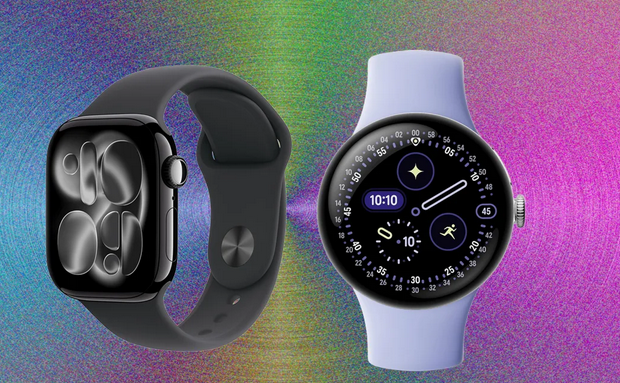
Premium all-rounders — Best for iPhone or Android users who want a seamless mix of health, apps, and style. (Great displays, app ecosystems, smart features.)
-
Sport & endurance — Best for runners, cyclists, swimmers and outdoor athletes. (Advanced GPS, long battery, rugged build.)
-
Health-first — Best for users prioritising wellness metrics and medical-grade sensors. (ECG, SpO2, stress monitoring, sleep stages.)
-
Budget smartwatches — Best for casual users who want basic tracking and long battery life without breaking the bank.
-
Hybrid / fashion-forward — Best for users who want an analogue look with smart features (notifications, step tracking).
What I evaluate in these reviews (the checklist)
When judging any smartwatch I consider:
-
Design & build — materials, size options, comfort for daytime + sleep.
-
Display — brightness, resolution, always-on option, touch responsiveness.
-
Battery life — real-world day-to-day and heavy-use scenarios (GPS, music).
-
Performance & OS — smoothness, apps, notifications, voice assistant.
-
Health & fitness features — heart rate accuracy, GPS, altimeter, swim-proofing, advanced training modes.
-
Sensors & accuracy — GPS, heart sensor, ECG, SpO₂, temperature, barometer.
-
Ecosystem & apps — third-party app availability, watch app store, smartphone integration.
-
Value for money — price vs features and longevity (software updates).
-
Durability & warranty — water resistance rating, case strength, service options.
This guide will compare representative watches from the major categories above and then provide buying recommendations.
Premium All-Rounders — best for daily smart features and apps
Why choose premium? You get the most polished displays, fastest processors, and the richest ecosystems. These watches are designed to be worn all day and often double as fashion pieces.
Strengths
-
Exceptionally smooth OS and app integration with phones.
-
High-quality materials (aluminium, stainless steel, titanium, ceramic).
-
Best displays (always-on, high brightness).
-
Advanced health sensors (ECG, accurate HR monitoring).
-
Fast charging on newer models.
Performance notes
Premium watches excel at notification handling, quick replies, maps/navigation, and media controls. They usually support a larger third-party app ecosystem which makes them more flexible: banking, rideshares, music streaming, productivity tools.
Battery trade-off
Expect 1–2 days of heavy use for feature-rich premium models with always-on displays. Some models stretch to 2–3 days with power-saving modes.
Who should buy
If you want the most polished experience and don’t want to compromise on apps or design, premium is the route.
Sport & Endurance — best for athletes and outdoors
Why choose sport watches? These are engineered for accuracy and durability: multi-band GPS, longer battery life, robust training software, VO₂ max estimation, recovery metrics, and route navigation.
Strengths
-
Exceptional GPS accuracy and multi-frequency GNSS support on higher-end units.
-
Battery life measured in days to weeks (depending on mode).
-
Comprehensive training metrics—lap analysis, power metrics, cadence, swimming metrics.
-
Rugged design (military-standard protection, strong water resistance).
Performance notes
Sport watches are factories of metrics — if you live by training zones, recovery scores, or rely on precise GPS for long runs or hikes, this category is for you. They pair with advanced cycling power meters, footpods, and training platforms seamlessly.
Battery trade-off
Much longer battery life because they often use more efficient displays and prioritise sensor performance over fancy third-party apps. With GPS-heavy use, expect anywhere from 10–40 hours of continuous tracking on advanced models, sometimes far more in low-power modes.
Who should buy
Runners, triathletes, hikers, or athletes who want reliable, long-lasting devices with deep analytics.
Health-First — best for wellness monitoring & medical-style sensors
Why choose health-first? If you want advanced health data (ECG, continuous SpO₂, skin temperature trends, stress tracking), these watches prioritize clinical-grade or near-clinical sensors and analytics.
Strengths
-
ECG and irregular heart rhythm detection.
-
In-depth sleep tracking with sleep stage analysis and breathing metrics.
-
Continuous SpO₂ monitoring and trends.
-
Temperature sensing for cycle tracking and illness detection.
Performance notes
Health-first watches focus on continuous and passive data collection. They pair with health apps to give long-term trends and sometimes share data with clinicians. Accuracy is improving, but the best outcomes come with consistent wear and correct fit.
Battery trade-off
Because of continuous monitoring, battery life is often moderate — typically 1–4 days depending on the intensity of sensors used.
Who should buy
People who want health insights beyond steps and calories — particularly those monitoring heart conditions, sleep disorders, or women tracking cycles and ovulation windows.
Budget Smartwatches — best bang for your buck
Why choose budget? You get the core smartwatch experience at a fraction of the cost: notifications, activity tracking, a decent display, and very long battery life.
Strengths
-
Outstanding battery life (up to two weeks or more).
-
Clean, simple fitness tracking: steps, basic heart rate, sleep.
-
Often durable and lightweight.
-
Easy-to-use companion apps.
Performance notes
Budget watches trade app availability and sensor depth for simplicity and value. Accuracy for basic metrics is acceptable; GPS may be missing or sub-par in cheaper models.
Battery trade-off
This category wins on battery: if you want something you charge weekly or less, budget options often win.
Who should buy
Casual users who primarily want notifications, long battery life, and budget-friendly fitness tracking.
Hybrid / Fashion-forward — style with a dash of smarts
Why choose hybrid? These watches look like high-end analog timepieces but add smart features such as step counting, notifications, and long battery life (sometimes months).
Strengths
-
Classic watch aesthetics with real mechanical hands.
-
Long battery life (standard coin cell batteries may last months).
-
Subtle smarts (vibration alerts, basic activity monitoring).
Performance notes
Not for heavy fitness tracking or apps — hybrids are style-first. Great for formal wear where a screen would feel out of place.
Who should buy
Users who want a traditional watch look while keeping a few modern conveniences.
Head-to-head feature comparison (high level)
-
Display & usability
-
Premium: OLED/AMOLED, always-on, highest brightness.
-
Sport: Readable in sunlight, often transflective screens for battery efficiency.
-
Health-first: Clear displays but sometimes prioritise sensor housing over screen polish.
-
Budget: IPS/LCD or AMOLED on better models; UI is simplified.
-
Hybrid: No big screen; small notification indicators.
-
-
Battery
-
Premium: 1–3 days typical.
-
Sport: 1–2 days full-featured; extended in low-power GPS mode.
-
Health-first: 1–4 days depending on continuous monitoring.
-
Budget: 7–14+ days common.
-
Hybrid: Months (with limited smart features).
-
-
Sensors
-
Premium: HR, SpO₂, ECG (on some), altimeter, GPS.
-
Sport: Multi-band GNSS, HR, cadence, power support.
-
Health-first: ECG, continuous SpO₂, temperature sensors.
-
Budget: HR and SpO₂ on many, GPS usually via phone.
-
Hybrid: Basic step and HR in rare cases.
-
-
Ecosystem
-
Premium: Large app stores, deep smartphone integration.
-
Sport: Strong companion apps; integration with training platforms.
-
Health-first: Health app integration and data export for clinicians.
-
Budget: Simpler apps with fewer third-party integrations.
-
Hybrid: Minimal app functionality.
-
Real-world performance — everyday considerations
-
Notifications & replies: Premium watches handle these best — quick replies, dictation, and app actions work smoothly. Budget devices can show notifications but replies are limited.
-
Music & media: If music storage or offline streaming on the watch matters, premium devices usually support it. Sport watches often allow offline music for workouts.
-
Navigation: Built-in, turn-by-turn navigation is great on premium and sport watches; budget watches often rely on the phone.
-
Comfort for sleep: Choose smaller form factors for overnight wear. Band material makes a difference—silicone and soft fluoroelastomer bands are comfortable; metal can be bulky.
-
Software updates: Premium brands provide multi-year OS updates. Cheaper brands may not guarantee long-term updates — important if you want the watch to stay relevant.
Value for Money — what gives the best return?
Value depends on your priorities:
-
If you want longevity and the broadest utility, invest a bit more in a premium model from a well-supported ecosystem. You’ll get years of software updates and resale value.
-
If you’re a committed athlete, choose a sport watch. Even if the upfront cost is high, the training features and battery life make them cost-effective in the long run.
-
If health insights are your priority, a health-first watch can be invaluable for ongoing monitoring — the price often reflects the sensor suite and analytics.
-
If budget matters, modern budget watches deliver surprisingly strong performance for everyday tasks — great for students and casual users.
A good rule: buy the best watch you can afford that checks your top two must-haves. If your must-haves are great battery and accurate GPS, skip premium watches that top out around 1–2 days battery unless you’re happy using low-power modes.
Buying tips — how to pick the right model
-
Platform compatibility — Some watches work best with certain phones (iOS vs Android). Double-check app support and feature parity.
-
Size matters — Measure your wrist and compare sizes. A 44–46mm case may be fine for large wrists but overwhelm smaller wrists.
-
Try a band — Comfort matters. Replaceable bands are a big plus.
-
Battery needs — If you travel or train long hours, prioritise battery life.
-
GPS usage — If you run or cycle often, prefer watches with built-in GPS (ideally multi-band GNSS).
-
Future updates — Brands that commit to software updates give more longevity.
-
Warranty & service — Check the warranty length and local service options in your area.
-
Accessories — Extras like charging docks, power banks for the watch, and compatible sensors can improve value.
Final verdicts — who should buy what
-
Buy a premium all-rounder if you want the best daily experience: calls, apps, mainstream fitness tracking, and a premium look. Ideal for tech-savvy users who want a single device to do everything.
-
Buy a sport watch if your primary use is serious training or outdoor adventures. You’ll appreciate battery life and accuracy.
-
Buy a health-first watch if you need clinical-grade monitoring and long-term health trends.
-
Buy a budget watch if you want notifications, basic fitness tracking, and exceptional battery life without spending much.
-
Buy a hybrid if style and long battery life are more important than advanced features.
Frequently asked questions (short & practical)
Q: Can a smartwatch replace a smartphone?
Not completely. Smartwatches can handle many day-to-day tasks — messages, calls (some models), navigation, and music — but they still rely on a phone for deep app experiences and heavy typing.
Q: Do I need GPS on my watch?
If you exercise outdoors (running, cycling, hiking) and want accurate route and pace data, yes. Phone GPS can work but is less convenient and drains phone battery.
Q: How accurate are heart rate and SpO₂ on smartwatches?
They’re generally good for trends and fitness tracking. For medical diagnosis, use clinical devices or consult a doctor; some watches offer ECG that approximates clinical readings but still require confirmatory testing for many conditions.
Q: Will my smartwatch stay useful after a few years?
Depends on brand support. Premium brands often push software updates for several years; budget options may slow down sooner. Consider resale value and the ability to replace bands and batteries when applicable.
Closing thoughts
Smartwatches now span a broad spectrum from fashion accessories with smart features to rugged training computers and near-clinical health monitors. There is no universally “best” watch — the right choice balances design, features, and costs against how you live and what you’ll use the watch for. If you prioritise apps, smooth performance, and style, invest in a premium model. If training, battery life, or health monitoring are top priorities, opt for a sport or health-first device. And if simplicity and endurance matter, budget and hybrid watches deliver exceptional value.