The smartphone market in 2025 looks familiar and refreshingly different at the same time. Flagship models continue to push camera, display, and AI-driven feature sets to ridiculous heights, while mid-range and budget phones keep getting smarter, delivering better screens, longer battery life and competent cameras without breaking the bank. This article breaks down the best phones of 2025 across budgets — flagship, upper mid-range, true mid-range, budget and ultra-budget — and explains which models you should consider depending on what you value most: camera, battery life, display, software, or sheer value.
How we chose these phones
There’s a lot of nuance behind “best” depending on your needs. For this round-up I prioritized real-world balance: camera performance, battery life and charging, display quality (brightness, refresh rate, color), sustained performance (thermals and chipsets), software experience and update policy, and of course price-to-spec value. Where notable, I highlighted features that make a phone stand out for a specific use-case (gaming, photography, daily multitasking, or longer battery endurance). The selections below mix editorial consensus from leading reviews and hands-on reports with observed value and availability in 2025 markets.
Flagship: Best overall — what to buy if money isn’t the limit
Apple iPhone 17 Pro Max (Best overall for iOS users)
Apple’s 2025 Pro Max continues the company’s yearly tradition: incremental design finesse, a tuned camera system, and powerful silicon. The iPhone 17 Pro Max is the best pick if you want the most polished, long-term software support, industry-leading video recording, and strong resale value. Its system-level integration with apps and accessories makes it the simplest “just works” flagship for users entrenched in Apple’s ecosystem.
Why choose it: superb video capabilities, polished OS updates (longest support window), and top-tier performance for apps and creative workflows.
Samsung Galaxy S25 Ultra (Best Android flagship)
Samsung’s S25 Ultra is the Android answer to the iPhone — gigantic, feature-rich and camera-forward. It emphasizes a superb AMOLED display with ultrahigh refresh rate, an advanced multi-sensor camera array, and an S-Pen experience for productivity. If you prefer Android and want maximum screen real estate and software flexibility, the S25 Ultra sits near the top.
Why choose it: brilliant OLED display, versatile zoom and wide-angle cameras, robust ecosystem (DeX, wearable integration).
Google Pixel 10 Pro (Best for computational photography and AI)
Google’s Pixel line has leaned heavily into computational photography and on-device AI features. The Pixel 10 Pro keeps that edge — delivering image processing that often outperforms raw hardware with clever software, plus AI-powered assistants and features baked into the camera and OS. Choose Pixel if you want consistently great still photos and smart software features.
Why choose it: top-tier software-driven camera results, clean Android with fast updates and AI features.
Upper mid-range: Big performance, smaller price
Upper mid-range phones around $400–$700 now blur the line with flagships more than ever. These devices give you a flagship-level screen and good cameras but skip some of the ultra-premium extras (like periscope telephotos, ceramic finishes, or the highest-grade sensors).
Best pick: OnePlus 13 (Value flagship)
OnePlus has a history of flagship killers, and the OnePlus 13 continues that by offering near-flagship chipsets, fluid displays, and fast charging at a lower price than many true flagships. If you want high performance for gaming and smooth UI responsiveness without flagship pricing, OnePlus is a strong pick.
Runner-up: Samsung Galaxy A-series upper models / Pixel “a” successors
Samsung and Google’s mid-premium lines deliver reliable cameras and impressive displays (often borrowed from their top-tier devices). They’re excellent for buyers who want brand familiarity and solid update policies at lower cost.
Why buy upper mid-range: get flagship-caliber performance and displays with small compromises — often the best “sweet spot” for most users.
Mid-range: Best balance under $400
The mid-range bracket is the biggest battleground. Manufacturers pack great batteries, decent chipsets, and 90–120 Hz OLEDs into phones that cost a fraction of the flagships.
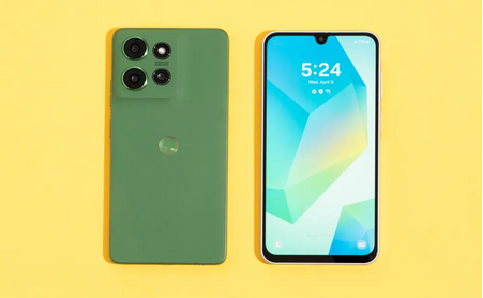
Best pick: Motorola G-series (e.g., Moto G85/G55)
Motorola’s G-series has matured into a true mid-range champion: very solid battery life, useful cameras, and clean software. These phones tend to give the best day-to-day experience without the bloated UI layers found on some cheaper Android skins. Many reviewers name Motorola models as best budget/midrange choices of 2025.
Honorable mentions: Xiaomi/Redmi mid-range and Honor devices
Xiaomi’s Redmi and Honor’s mid-range lineups consistently provide excellent spec-for-price: fast charging, high refresh-rate displays, and competitive camera hardware. If you’re after raw specs (big battery, fast charging) for the money, these brands are worth exploring.
Why choose mid-range: the strongest value — great for users who want a modern phone that handles everyday tasks, streaming and light gaming without premium pricing.
Budget: Best phones under $300
Budget phones in 2025 are far better than just “cheap” — many have 5G, decent OLEDs and multi-day battery life. If your budget is tight, you can still get a capable smartphone for general use.
Best pick: Motorola Moto G04 / Moto G55 (depending on market)
Motorola’s low-end G models have repeatedly won “best budget” lists thanks to dependable battery life, acceptable cameras and clean firmware. If you want the least fuss and reliable updates, a Motorola G-series model is typically the safest bet.
Other budget contenders
-
Poco / Redmi A-series — aggressive pricing and solid performance for light gaming and media.
-
Samsung Galaxy A0x “value” variants — slightly higher price but often better software support.
-
Renewed older flagships (refurbished) — if you can stretch the budget slightly, certified refurbished flagships (a year or two old) can be the best value buy.
Why choose budget models: dependable for calls, messaging, social media, streaming — and many include 5G now.
Ultra-budget and entry-level: under $150
If you need the absolute cheapest practical smartphone — for a child, secondary device, or emergency phone — 2025’s ultra-budget options offer surprising value. Expect LCD screens, basic SoCs, and modest cameras, but most now include 5G and very long-lasting batteries.
Good picks: ultra-budget phones from Infinix, Tecno, certain Redmi A-series or Samsung M-series stripped-down models.
Why choose ultra-budget: lowest upfront cost while still getting a usable smartphone; ideal for secondary devices or light users.
Foldables: who should consider them in 2025?
Foldables are no longer fragile curiosity pieces — in 2025 they’re mainstream propositioned into two flavors: large “book” foldables that replace tablets, and compact “flip” foldables that prioritize pocketability with a tall external screen.
Best foldable overall: Samsung Galaxy Z Fold 7
Samsung continues dominating the foldable space, refining hinge durability, display crease reduction and software multitasking. The latest Z Fold delivers the best tablet-like phone experience with powerful silicon and one of the most productive software suites for multitasking.
Best compact foldable (flip): Galaxy Z Flip 7 / Oppo Find N series
For users who value pocketability and nostalgia (clamshell style), modern flips provide flagship performance in a compact footprint. They’re great for selfies and single-handed use, while still folding down to a tiny size.
Who should buy a foldable: creative professionals and power users who value screen real estate for multitasking, or anyone who wants a pocket-sized device with a big inner display. Expect a premium price, but also a unique, future-forward experience.
Best camera phone of 2025
If photography is everything to you, the top camera phones in 2025 combine big sensors, strong optical zooms and powerful computational photography. Top picks include flagship models from Apple, Samsung and Xiaomi (whose Ultra variants typically push sensor and zoom technology). The Pixel line remains a leader in software-driven image quality, especially in difficult lighting.
Battery life and charging winners
If battery endurance matters more than a shiny camera, look for phones with 5,000–7,000 mAh batteries in the mid and budget segments. Brands such as Realme and Infinix continue to champion huge batteries with moderate charging speeds, while flagships focus on a balance of fast wired charging (100W+ is becoming common) and wireless charging capabilities. For multi-day stamina, prioritize battery capacity and power-efficient chipsets over headline fast charging.
Value picks: best bang for the buck
A few phones stand out as consistent “value” picks in 2025: devices that either undercut competition on price or offer flagship-like features at mid-range prices. These include certain OnePlus models, Xiaomi’s mid-range series, and refreshed Motorola G-series phones. Buying a value model is smart if you want most of the flagship experience without paying flagship tax.
Practical buying tips (2025 edition)
-
Decide your must-haves first. Camera? Battery? Software updates? Pick the three features that matter most and use them to filter choices.
-
Don’t chase GHz — check sustained performance. Some chips benchmark well but throttle under long use; real-world performance matters for gaming and productivity.
-
Software updates matter. A cheaper phone that receives 3–4 years of security and OS updates will age better than a pricier device with no update promises.
-
Consider refurbished flagships. They’re a great way to get premium hardware at a mid-range price.
-
Compare battery capacity vs efficiency. A smaller, more efficient chip with 4,500 mAh can outlast an inefficient phone with 5,500 mAh.
-
Check supported bands and features in your market. Not all models support every carrier’s 5G bands or Wi-Fi 7, so verify local compatibility.
Quick recommendations by budget
-
Flagship ($900+) — iPhone 17 Pro Max or Samsung Galaxy S25 Ultra for those who want the highest-end experience.
-
Upper mid-range ($400–$700) — OnePlus 13 or higher-end Galaxy A/Pixela-like variants for near-flagship performance.
-
Mid-range ($200–$400) — Motorola G-series, Redmi/Xiaomi mid-range or Honor models — best for balanced needs.
-
Budget (under $200–$300) — Moto G04 / G55, Poco/Redmi A-series — best value for daily users.
-
Ultra-budget (under $150) — Infinix/Tecno/entry Redmi models for basic and backup use.
-
Foldables (premium) — Galaxy Z Fold 7 for productivity; a Flip for pocketability.
Final verdict: pick the phone that fits you
2025 is less about one dominant phone and more about excellent, tailored choices across price tiers. Flagships push the envelope with cameras, AI features and display tech, but the most exciting change this year is how good mid-range and budget phones have become — they now cover the vast majority of everyday user needs at a tiny fraction of flagship cost.
If you want the best overall experience and maximum longevity, choose a flagship (iPhone or Samsung). If you want the best value, aim for the upper mid-range or the best-reviewed mid-range models. If cost is the primary factor, modern budget phones offer compelling features (5G, OLED, large batteries) that make them excellent everyday companions.
Whichever route you take, prioritize the features that match your daily habits — and remember: the “best” phone is the one you’ll happily use every day.